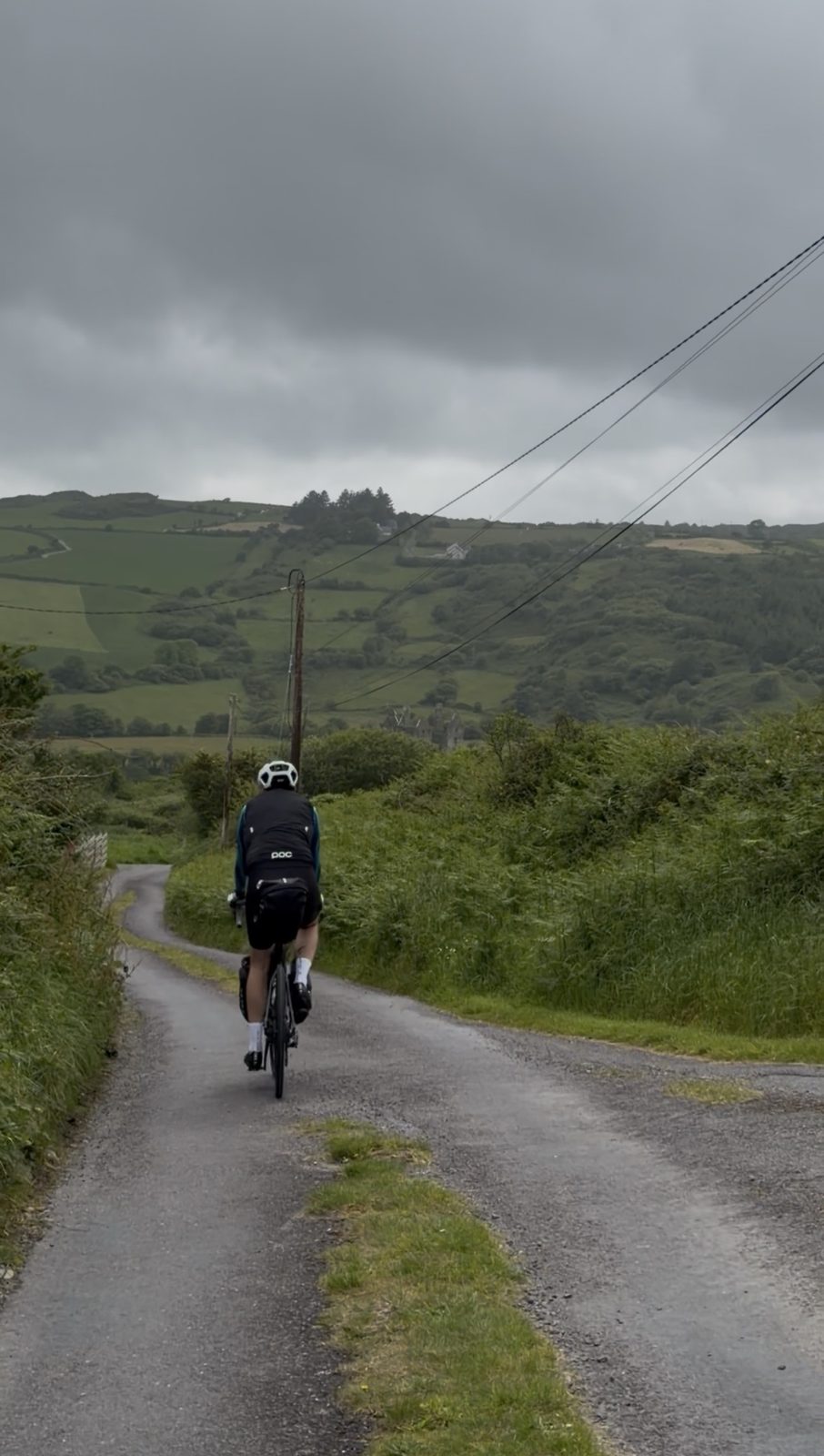
The first day on Ireland's Wild Atlantic Way: 68 km through West Cork from the colourful harbour town of Kinsale to Skibbereen, weaving past tidal inlets and quiet green hills.
Map, elevation, and the route file to take with you.
West Cork's roads are a mix of quiet R-roads and single-lane boreens between the hedgerows. Where the busier R600 hugs the coast you can stay on it when traffic is light, or drop onto the smaller lanes the route follows inland. The route file has the full line either way.
The opening leg of the Wild Atlantic Way, through the heart of West Cork.
"Day one of the Wild Atlantic Way, and the sea will not leave you alone. It keeps slipping inland to find you, one green-walled inlet at a time."
The Wild Atlantic Way is a 2,500 km coastal route that runs the whole western edge of Ireland, and Kinsale is its official southern start. We rolled in the day before as a warm-up: the train down from Dublin to Cork, then out to Kinsale by bike to line up at the start proper. It is a lovely place to begin. A medieval fishing port turned bohemian harbour town, Kinsale is known for its tight streets of brightly painted houses, its yacht-filled harbour guarded by the star-shaped Charles Fort, and a food scene good enough to have earned it the tag of Ireland's gourmet capital. We started with breakfast at the Post House on Main Street and, like most people, spent longer than planned just wandering the colour before pointing the bikes west.
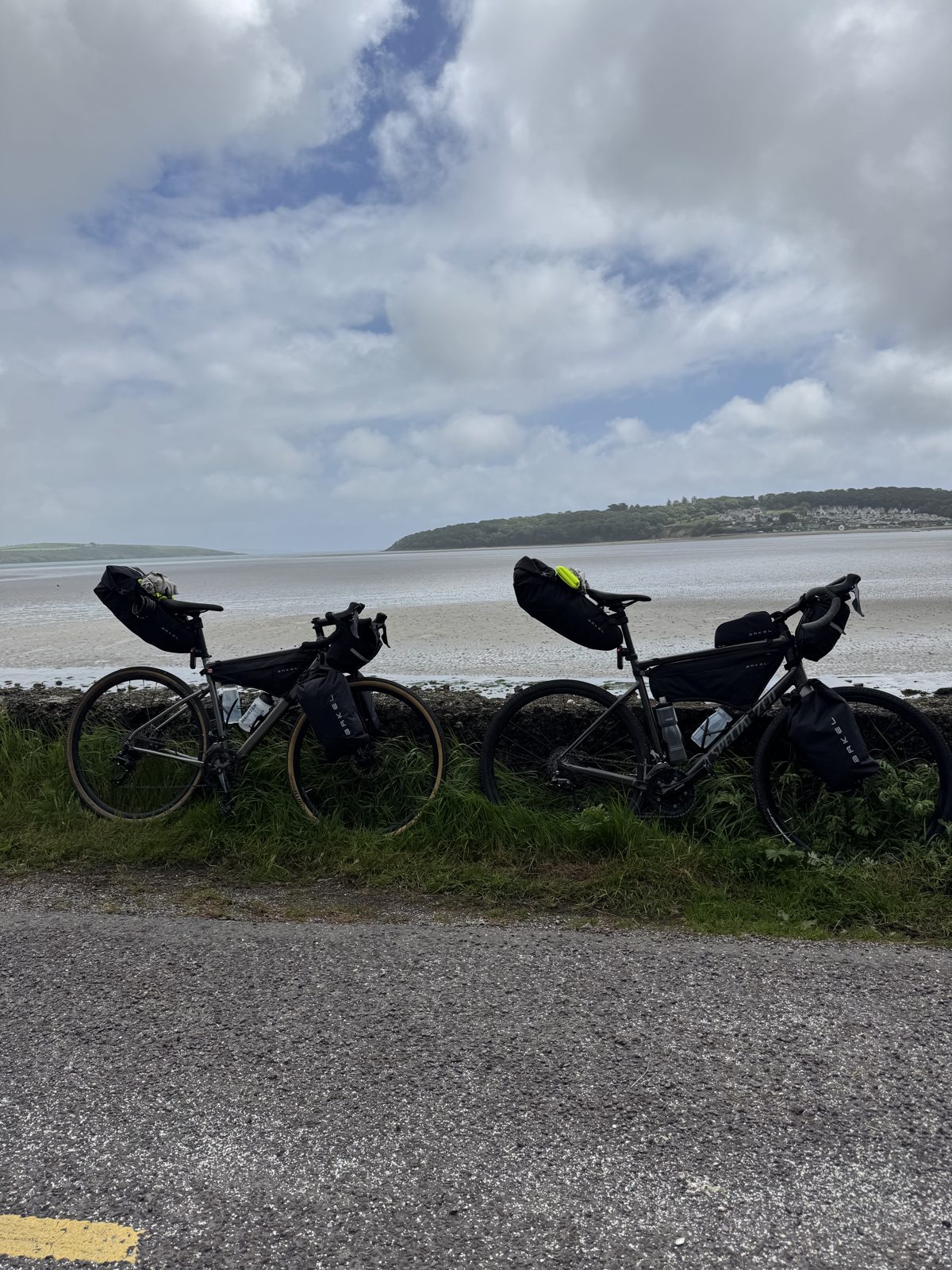
From Kinsale the day is pure West Cork: rolling and rarely flat, threading quiet lanes and short R-roads over one green hill after another, with 946 m of climbing stacked into 68 km. The coast pulls away and then keeps sneaking back, the Atlantic reaching inland through tidal inlets and river mouths that shine at low tide between the fields. The midway town is Clonakilty, one of the prettiest main streets in the county, all hand-painted shopfronts and a real food town: home of the famous Clonakilty black pudding, a Friday market on Georgian Emmet Square, and the birthplace of Michael Collins. It is the natural place to stop and eat before the afternoon push.
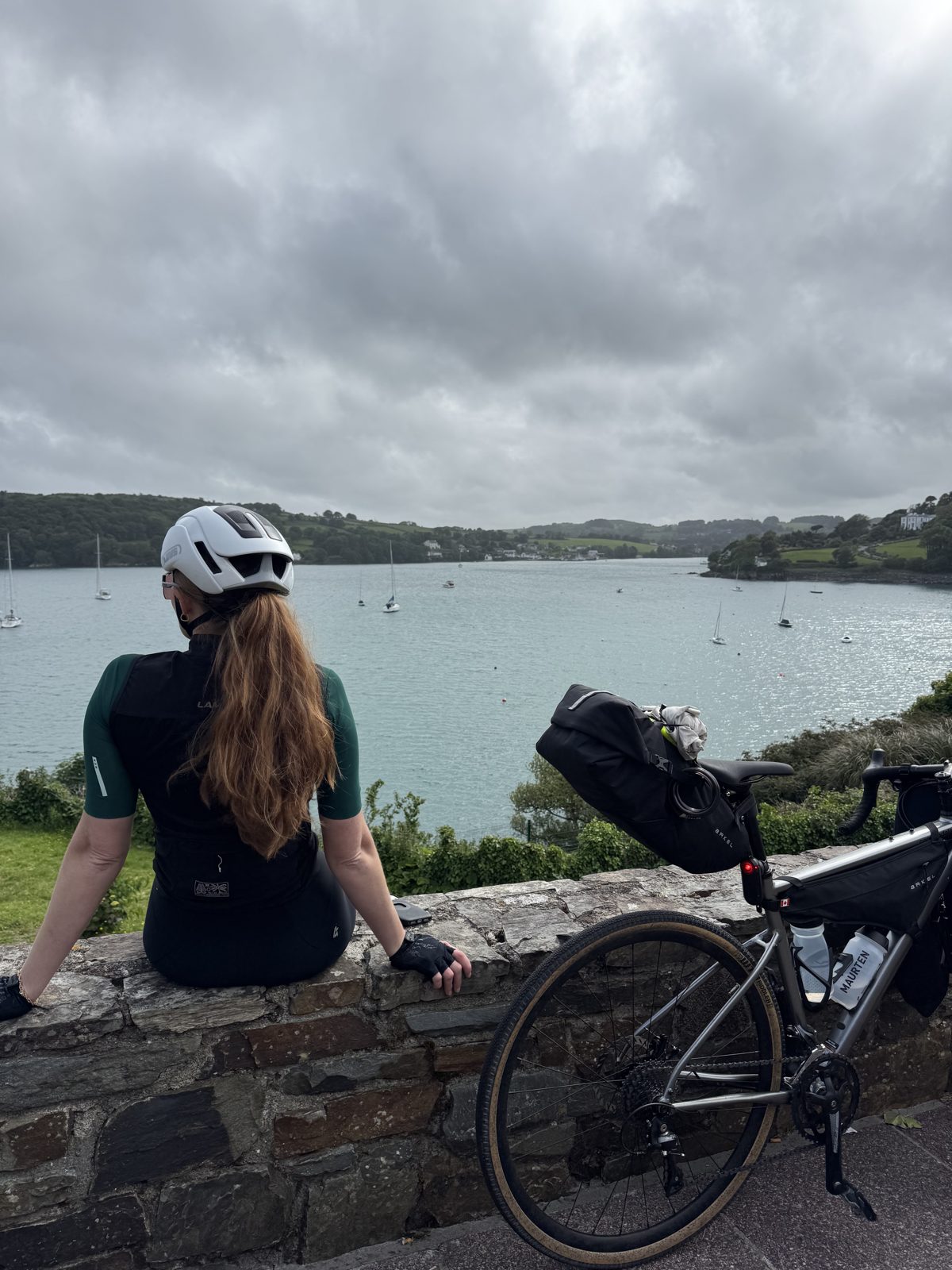
The last stretch drops toward the water at Glandore, a tiny sheltered harbour with the twin islands of Adam and Eve at its mouth and the Bronze Age Drombeg Stone Circle a short detour inland. It is the kind of view that only really lands when you have earned it under your own steam. From there it is a short run into Skibbereen, the market town at the gateway to the West Cork islands, where we found our first B&B and the easy hospitality this coast is known for. One day down, seven to go.
The reel from day one. Open on Instagram →
Food, refreshments, and local hints. Filter below.
Where we started the day. The Post House is a friendly little coffee shop and wine bar on Main Street with good espresso, pastries from local bakeries and a pretty courtyard out back. A calm spot to fuel up before the hills. In a town billed as Ireland's gourmet capital you are spoiled for breakfast, so take your pick, but this one treated us well.
Open in Maps →Kinsale is worth arriving early for. Wander the narrow lanes of painted houses around the Milk Market and the harbour before you leave, and if you have time, the star-shaped Charles Fort sits just out along the water on the way south. It is the official start of the Wild Atlantic Way, so it is a fitting place to clip in.
Open in Maps →We stopped in Clonakilty for lunch, roughly the halfway point, and it is a great little food town to break the ride. We ate at Arís, a relaxed café and wine bar on Ashe Street with locally sourced plates and home baking, but it is one of many good spots. Clonakilty is famous for its black pudding and its Friday market on Emmet Square, so wander and take your pick.
Open in Maps →If Arís is busy, this cosy little café tucked down Spillers Lane is a lovely alternative for coffee, homemade cakes, toasties and soup before the afternoon half. A good back-pocket option in the same town.
Open in Maps →Our last stop before Skibbereen, and the one that makes the case for doing this by bike. Glandore is a tiny sheltered harbour with the village stacked up the hillside, sailboats moored on the water below and the twin islands of Adam and Eve out at its mouth. Roll down, take it in, and if you have the legs the Bronze Age Drombeg Stone Circle is a short detour inland.
Open in Maps →We ended the day with dinner here, and it is a special one. The Church is a former 1833 Methodist church in the middle of Skibbereen, now the town's standout dining room under stained glass and high wooden ceilings. Expect West Cork beef, fish landed just down the coast at Union Hall, Irish farmhouse cheeses, and everything baked in house. Book ahead. A fitting reward after a hilly first day.
Open in Maps →This is rolling country, not flat, so settle into a rhythm and enjoy the up-and-down. The route mostly links quiet inland lanes with short stretches of R-road. Where the R600 runs along the coast it is a nice option in light traffic, but the smaller boreens between the hedgerows are the calm, pretty riding you came for. Fill bottles in the towns, as services thin out between them.
Open in Maps →The night's base in Skibbereen, and how to book it yourself.
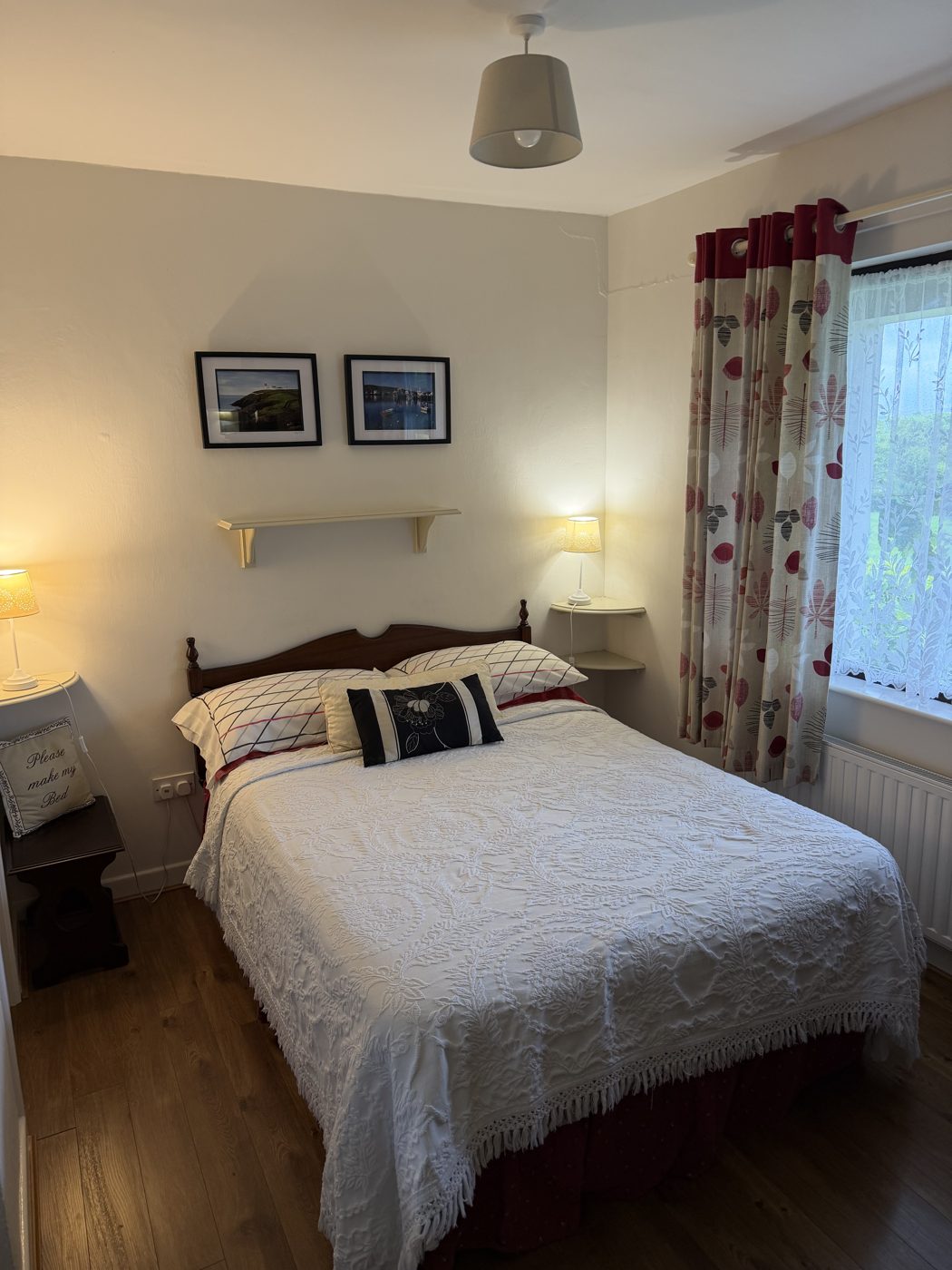
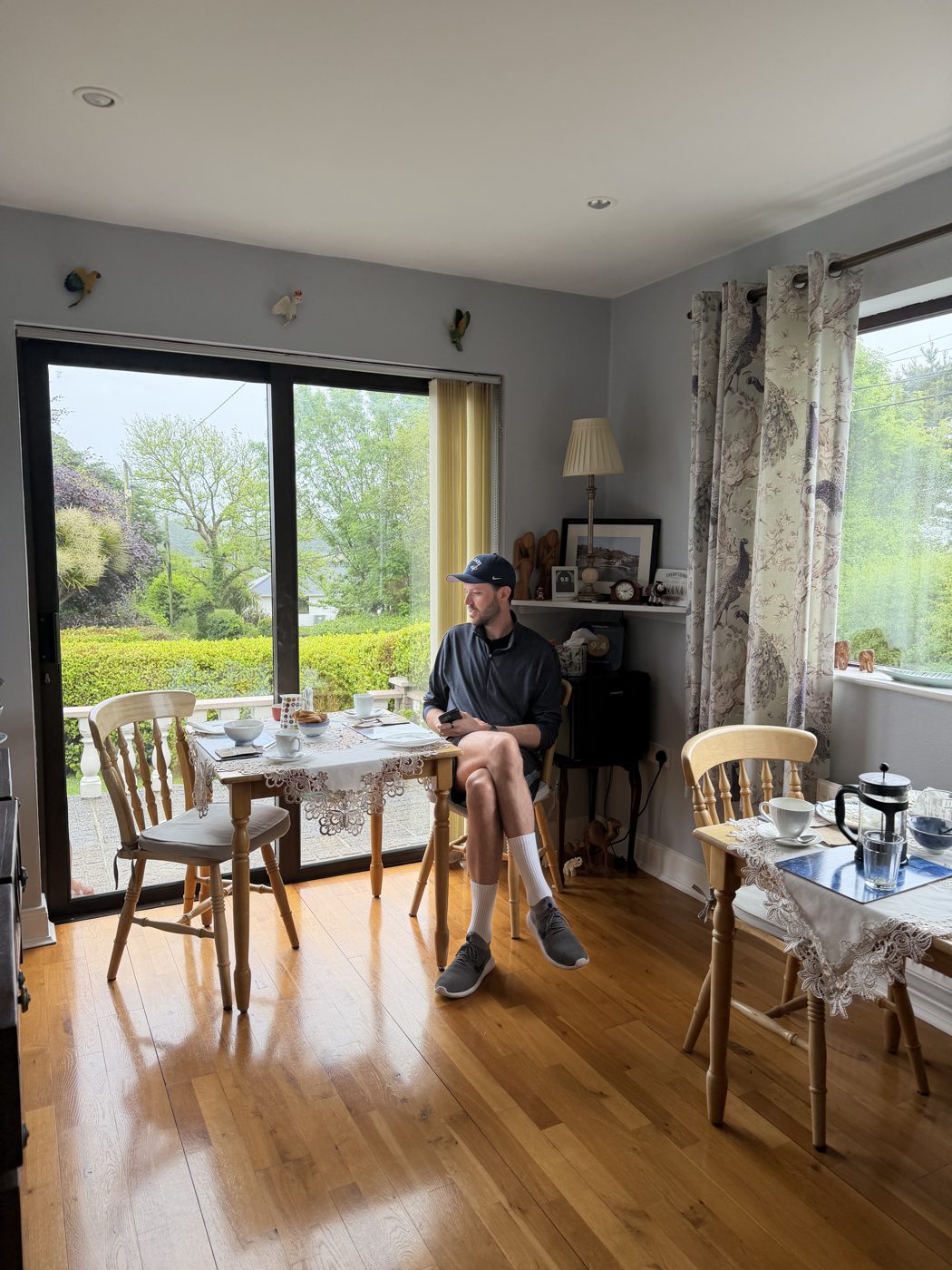
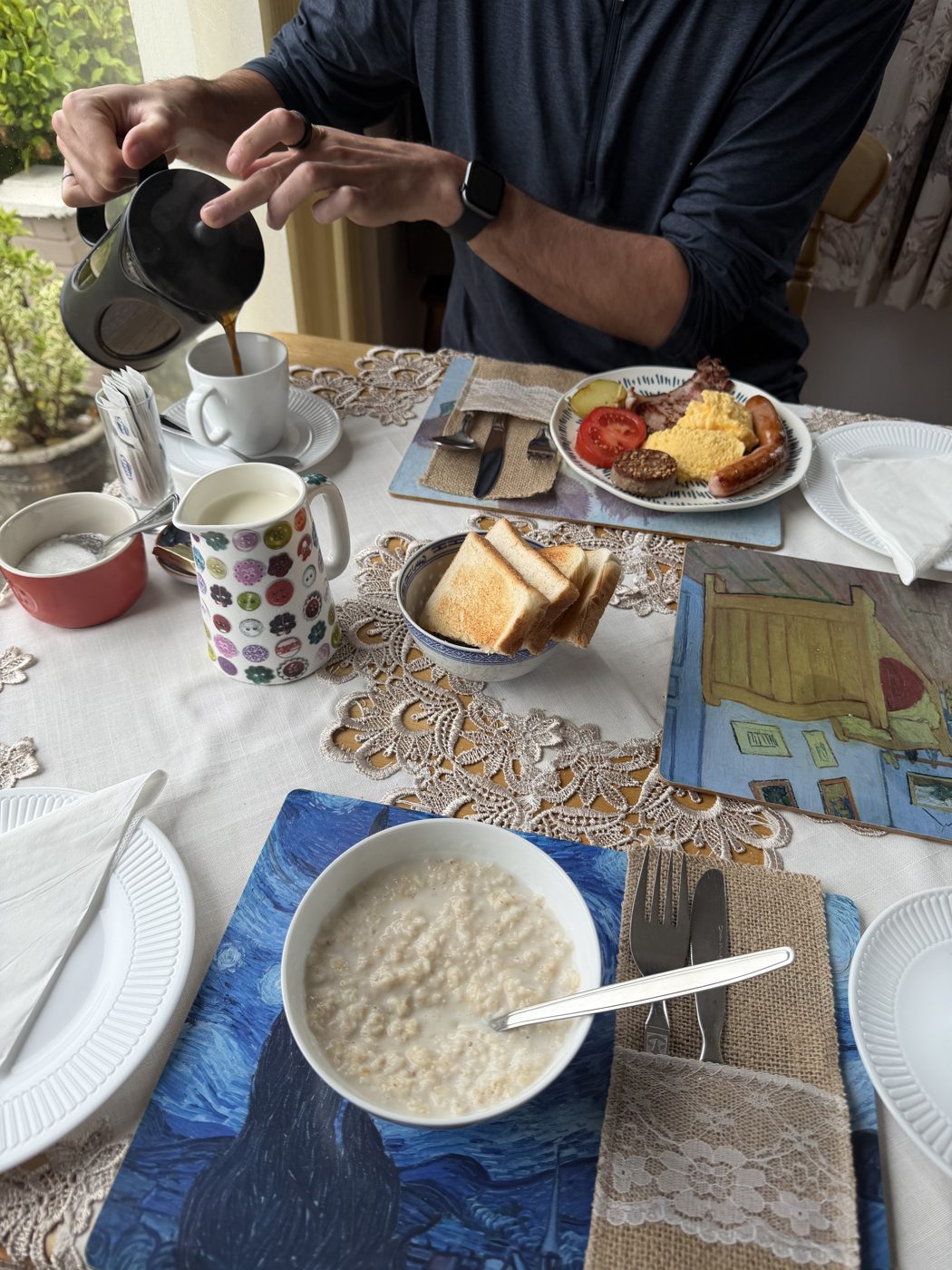
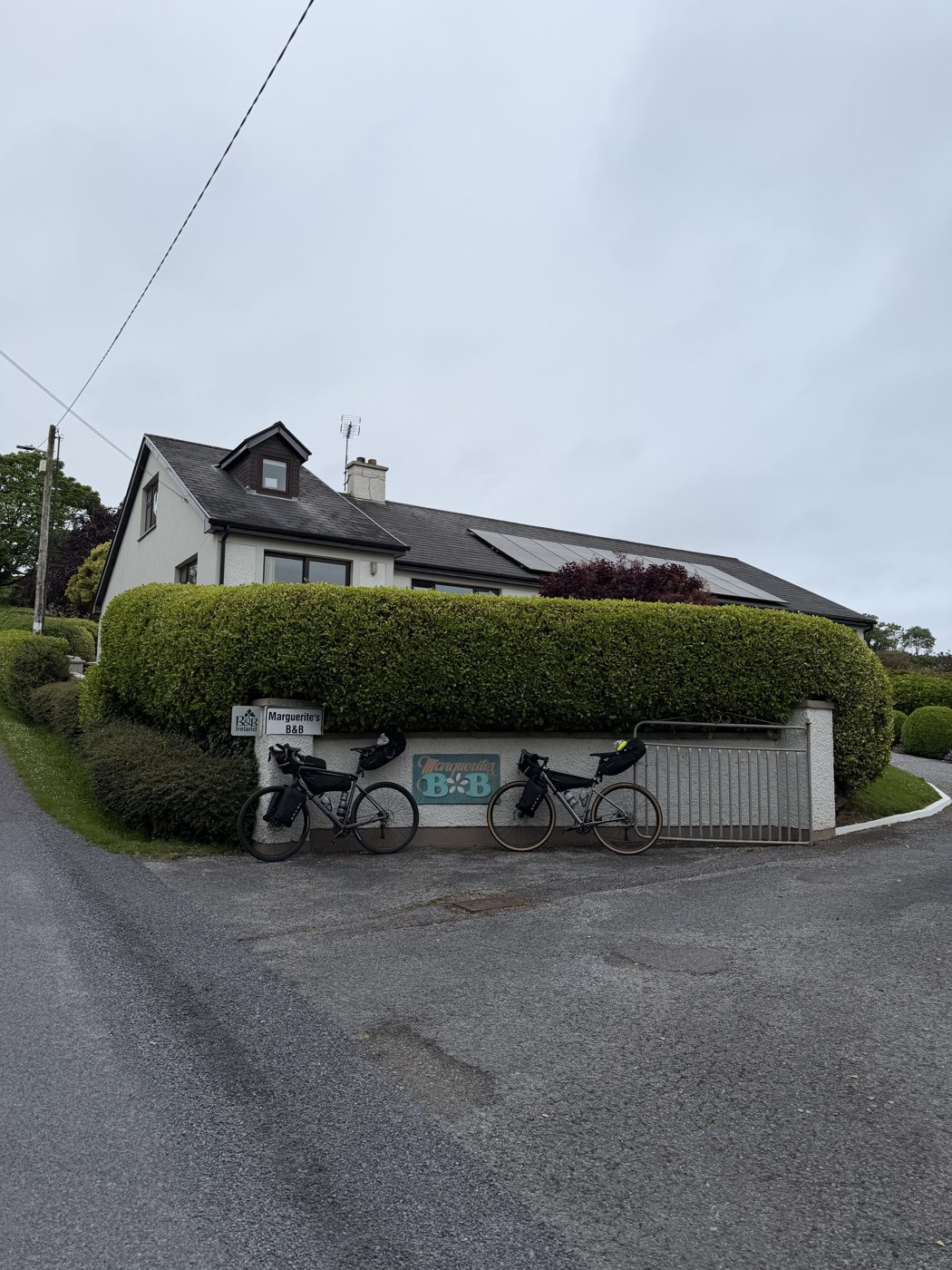
A warm, family-run B&B on a quiet road just outside Skibbereen, about a kilometre from town, with a beautiful clipped garden and our first proper taste of West Cork hospitality. Marguerite is a generous host, full of tips on where to eat, and breakfast is the real deal: her own soda bread, porridge, and a full Irish to send you off. An easy place to land after a hilly opening day, and to set up for day two down to Goleen.
A few frames from day one.